

MOPE Clinic Issues Louisiana Tip Sheet on Preserving Lean Mass During Significant Weight Loss
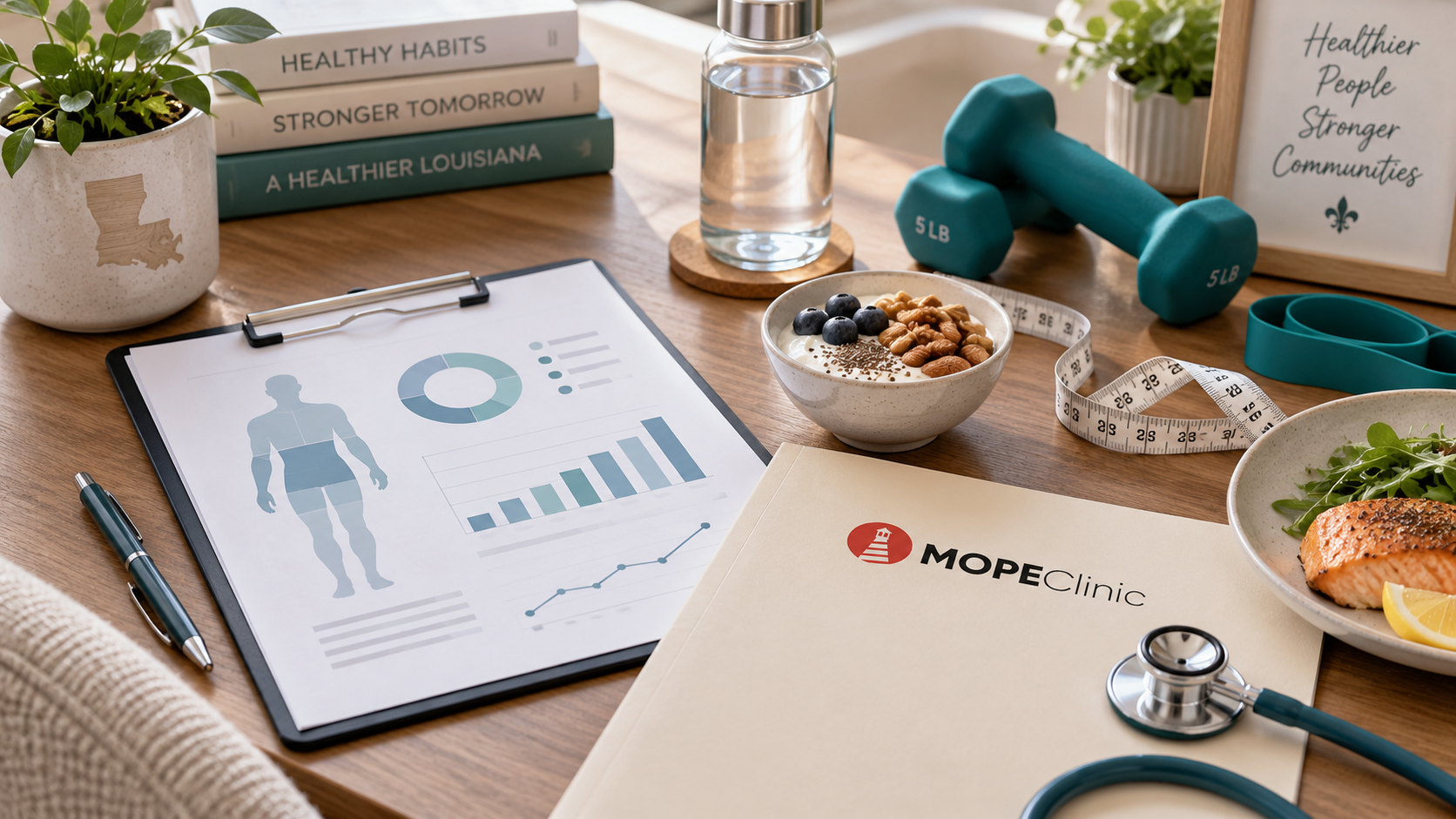
MOPE Clinic highlights the importance of nutrition, resistance training, hydration, and body composition during significant weight loss.
Metairie clinic highlights current research on muscle preservation, nutrition, resistance training and body composition during weight loss.
METAIRIE, LA, UNITED STATES, September 14, 2026 /EINPresswire.com/ -- MOPE Clinic, a physical medical clinic in Metairie serving Greater New Orleans and patients throughout South Louisiana, has issued an educational tip sheet focused on preserving lean mass and strength during significant weight loss.
The educational effort comes as more patients and healthcare professionals look beyond total pounds lost and pay closer attention to body composition, nutrition, strength and function during weight reduction.
Recent research has added important context to that discussion. A 2026 systematic review and meta-analysis published in Diabetes, Obesity and Metabolism evaluated 20 randomized controlled trials involving 15,782 participants. The analysis compared lean-mass changes seen with incretin-based therapies, including semaglutide, tirzepatide and liraglutide, with changes observed during intensive lifestyle interventions.
The researchers found that lean mass represented a portion of the total weight lost with both incretin-based therapy and lifestyle-based weight reduction. Lifestyle programs that included resistance training demonstrated the most favorable lean-mass preservation profile among the approaches evaluated. The authors concluded that resistance training, adequate protein intake and body-composition monitoring may help preserve lean mass during significant weight reduction.
The findings are important because total body weight does not distinguish between fat mass and lean mass.
Lean mass is also not synonymous with skeletal muscle. Depending on the measurement method, lean mass can include muscle, body water, organs and other non-fat tissues. Therefore, claims that a specific percentage of weight lost represents “muscle loss” can oversimplify a more complicated body-composition change.
“Weight loss is more useful when the conversation goes beyond the scale,” said Chris Rue, FNP-C, of MOPE Clinic. “Strength, nutrition, symptoms, body composition and the patient’s overall health all matter when evaluating progress.”
Why Body Composition Matters During Significant Weight Loss
A bathroom scale provides one measurement: total body weight.
It cannot show whether changes came predominantly from stored body fat, lean tissue, body water or a combination of those components.
Two individuals can lose the same number of pounds while experiencing different changes in body composition and physical function.
For that reason, clinicians may consider additional information when evaluating progress, including nutritional intake, activity level, strength, symptoms, medical history, medication tolerance and, when appropriate, body-composition measurements.
A separate prospective study published in 2026 followed adults with obesity receiving semaglutide while researchers assessed body composition and muscle function over 12 months. Lean mass declined earlier in the treatment period and later stabilized, while handgrip strength improved during follow-up. The findings highlight why changes in lean mass and changes in muscle function should not automatically be treated as identical outcomes.
Practical Ways to Support Lean Mass
MOPE Clinic’s educational recommendations focus on practical steps that patients can discuss with an appropriate healthcare professional.
1. Include resistance exercise when medically appropriate
Resistance exercise gives skeletal muscle a mechanical stimulus during weight reduction.
That can include free weights, resistance machines, resistance bands or appropriately selected body-weight exercises.
The goal does not have to be bodybuilding or high-intensity training. For many adults, a consistent and appropriately designed strength routine may be more useful than sporadic intense workouts.
Individuals with orthopedic limitations, cardiovascular conditions, chronic disease or little previous exercise experience should discuss an appropriate starting point with a healthcare professional.
2. Pay attention to protein and total nutrition
A reduced appetite can make it easier to eat fewer calories, but it can also make it harder to consume adequate protein, vitamins, minerals and other nutrients.
Protein needs differ from person to person. Age, body size, activity, kidney function, medical history and other factors can affect an appropriate intake.
Rather than following a universal protein recommendation from social media, patients may benefit from discussing nutrition with a clinician or registered dietitian.
One practical strategy is to prioritize nutrient-dense foods when appetite is limited. In some cases, eating the protein-containing portion of a meal before low-protein extras may help prevent an already-small meal from becoming nutritionally inadequate.
3. Track strength and function, not just scale weight
Functional changes can provide useful information that a scale cannot.
Individuals may want to note whether normal activities remain stable, improve or become more difficult.
Examples may include carrying groceries, getting up from a chair, climbing stairs, completing usual exercise or performing routine household tasks.
A noticeable decline in normal strength or exercise tolerance does not by itself diagnose muscle loss. However, it may provide useful information to discuss during a medical follow-up.
4. Monitor hydration
Hydration is particularly relevant in South Louisiana.
Metairie, New Orleans and surrounding communities frequently experience prolonged heat and humidity. Individuals who exercise outdoors, work in hot environments or spend significant time outside may need to pay closer attention to fluid intake.
Reduced appetite, nausea, vomiting or diarrhea may further affect hydration.
Persistent difficulty maintaining fluids should be discussed with a healthcare professional.
5. Avoid assuming faster weight loss is automatically better
A rapidly falling scale number may look encouraging, but rate of weight loss is only one part of the picture.
Nutrition, energy, physical function, tolerance, medical history and overall health should also be considered.
Patients should not independently increase or decrease prescription medication doses in response to appetite or weight changes.
A Simple At-Home Tracking Checklist
People undergoing significant weight loss can collect useful information between medical visits without attempting to diagnose themselves.
A simple weekly checklist may include:
Body weight, measured under reasonably consistent conditions
General appetite level
Protein-containing meals and snacks
Daily fluid intake
Number of resistance-training sessions
Ability to complete usual exercises
Energy level
Nausea or other gastrointestinal symptoms
Changes in normal daily activities
Questions to bring to the next clinical appointment
The purpose of tracking is not to create a perfect record. Instead, it can help identify trends that may otherwise be forgotten between visits.
Common Mistakes During Significant Weight Loss
Several common habits may make it harder to maintain good nutrition and physical function.
One is focusing exclusively on calorie reduction while ignoring food quality.
Another is stopping resistance exercise because body weight is already decreasing.
A third is assuming that reduced hunger automatically means nutritional needs have been met.
Some individuals also rely heavily on scale weight while overlooking persistent fatigue, weakness or declining activity.
Medical evaluation may be appropriate when symptoms change significantly, particularly when weakness, dehydration, inability to maintain adequate intake or substantial gastrointestinal symptoms develop.
Frequently Asked Questions
Does significant weight loss always cause muscle loss?
Not always, but significant weight reduction can include some loss of lean tissue. The amount varies among individuals and can be influenced by age, activity level, nutrition, amount of weight lost, baseline body composition and other factors.
Are GLP-1 medications the only type of weight-loss approach associated with lean-mass loss?
No. The 2026 meta-analysis found that lean-mass reduction also occurred with intensive lifestyle interventions. The proportion of weight lost as lean mass was broadly comparable between incretin-based therapy and lifestyle intervention in the studies analyzed. Resistance-training programs showed a more favorable profile.
Is lean mass the same as muscle?
No. Lean mass is a broader body-composition category. It can include skeletal muscle, body water, organs and other non-fat tissue.
Can resistance training help preserve muscle during weight loss?
Current evidence supports resistance training as an important strategy for preserving lean tissue during weight reduction. The type and intensity should be appropriate for the individual’s health and physical ability.
How much protein is needed during weight loss?
There is no single amount that is appropriate for everyone. Protein needs may vary with age, body size, activity level, health status, kidney function and other factors. Individual guidance may be appropriate.
Should someone track body composition instead of body weight?
Body composition can provide information that body weight alone cannot, but the two measurements answer different questions. Whether body-composition testing is useful, and how frequently it should be performed, depends on the individual and the clinical setting.
Does losing lean mass automatically mean someone is becoming weaker?
Not necessarily. Lean-mass measurements and muscle function are related but are not identical. Strength, physical performance and ability to complete normal activities provide additional context.
What signs should be discussed with a clinician during significant weight loss?
New or worsening weakness, persistent dizziness, inability to maintain adequate food or fluid intake, ongoing vomiting or diarrhea, substantial changes in exercise tolerance or other concerning symptoms should be discussed with an appropriate healthcare professional.
Can low testosterone contribute to changes in strength or body composition in men?
Testosterone plays a role in muscle and body composition, but symptoms such as weakness or fatigue have many possible causes. Symptoms alone cannot establish a diagnosis of testosterone deficiency. Appropriate evaluation and laboratory testing are needed before hormone treatment is considered.
Is rapid weight loss safer if the person still feels well?
Not necessarily. Rate of weight loss is only one consideration. Nutritional adequacy, hydration, medical history, physical function and overall treatment tolerance also matter.
Questions Patients Can Bring to a Medical Visit
Patients may find it useful to ask:
Is the current rate of weight loss appropriate for my health and goals?
Am I eating enough protein and nutrient-dense food?
Would body-composition monitoring be useful in my situation?
What type of strength training is appropriate for me?
Could fatigue or weakness have another medical cause?
Are my current symptoms expected, or do they require further evaluation?
Do any of my medications or medical conditions affect nutrition, hydration or exercise?
Are laboratory tests appropriate based on my symptoms and treatment plan?
These questions can help shift the focus from scale weight alone to a broader assessment of health and function.
South Louisiana Considerations
Weight-management plans also need to fit the environment in which patients live.
South Louisiana’s heat and humidity can make outdoor activity more difficult during much of the year. High temperatures may also increase the importance of planning fluid intake, particularly for people exercising outdoors or working in physically demanding environments.
Local food culture can also influence day-to-day nutrition decisions.
Family gatherings, restaurant meals, festivals and social events are a regular part of life in Greater New Orleans. Sustainable weight management does not require avoiding every social meal. Instead, a realistic plan should account for those situations and help patients make practical decisions that can be maintained over time.
A Broader Medical View of Weight Loss
MOPE Clinic emphasizes individualized evaluation rather than treating body weight as the only measure of progress.
Depending on the patient and service, medical evaluation may include health history, symptoms, medications, nutritional intake, activity, treatment response, appropriate laboratory testing and other relevant measurements.
Patients may use their preferred lab location when laboratory testing is appropriate.
MOPE Clinic is a physical, concierge medical clinic in Metairie, Louisiana, serving Greater New Orleans and patients throughout South Louisiana. The clinic is appointment-only and provides individualized care related to weight management, men’s and women’s hormone optimization and other confirmed services.
Chris Rue, FNP-C, has 21 years of nursing experience, eight years as a family nurse practitioner and six years leading a hormone-optimization clinic.
A related educational article, “GLP-1 Muscle Loss: How to Protect Lean Mass While Losing Weight,” is available through the MOPE Clinic website.
About MOPE Clinic
MOPE Clinic, formally Metairie Optimal Performance Enhancement, is a physical medical clinic in Metairie, Louisiana. The clinic serves patients from Greater New Orleans and throughout South Louisiana through concierge, appointment-only care.
MOPE Clinic focuses on individualized medical evaluation and treatment planning rather than one-size-fits-all protocols. Current services include men’s hormone optimization, women’s hormone optimization, weight-management services and growth-hormone peptide services.
Concierge visits are available by appointment only.
Gwen M.
Designs For You
email us here
Visit us on social media:
Facebook
Legal Disclaimer:
EIN Presswire provides this news content "as is" without warranty of any kind. We do not accept any responsibility or liability for the accuracy, content, images, videos, licenses, completeness, legality, or reliability of the information contained in this article. If you have any complaints or copyright issues related to this article, kindly contact the author above.
